
After finishing final edits of my documentary projects on the Thai border, it was time to revisit the most common life decision as perpetual nomads: where to go next.
My partner and I had always felt a curious pull towards Bangladesh, and I had some local architect friends who I’d promised a visit whenever the opportunity presented itself. With the uncertainty of that moment after Thailand and no concrete plans ahead of us, it felt like that was the opportunity presenting itself. So I sent a message to my friends, reached out to some nonprofits who might be able to connect us to local humanitarian efforts, and booked tickets to Dhaka. Little did we know, our flight would be landing at the beginning of Ramadan - the biggest holiday in the country.
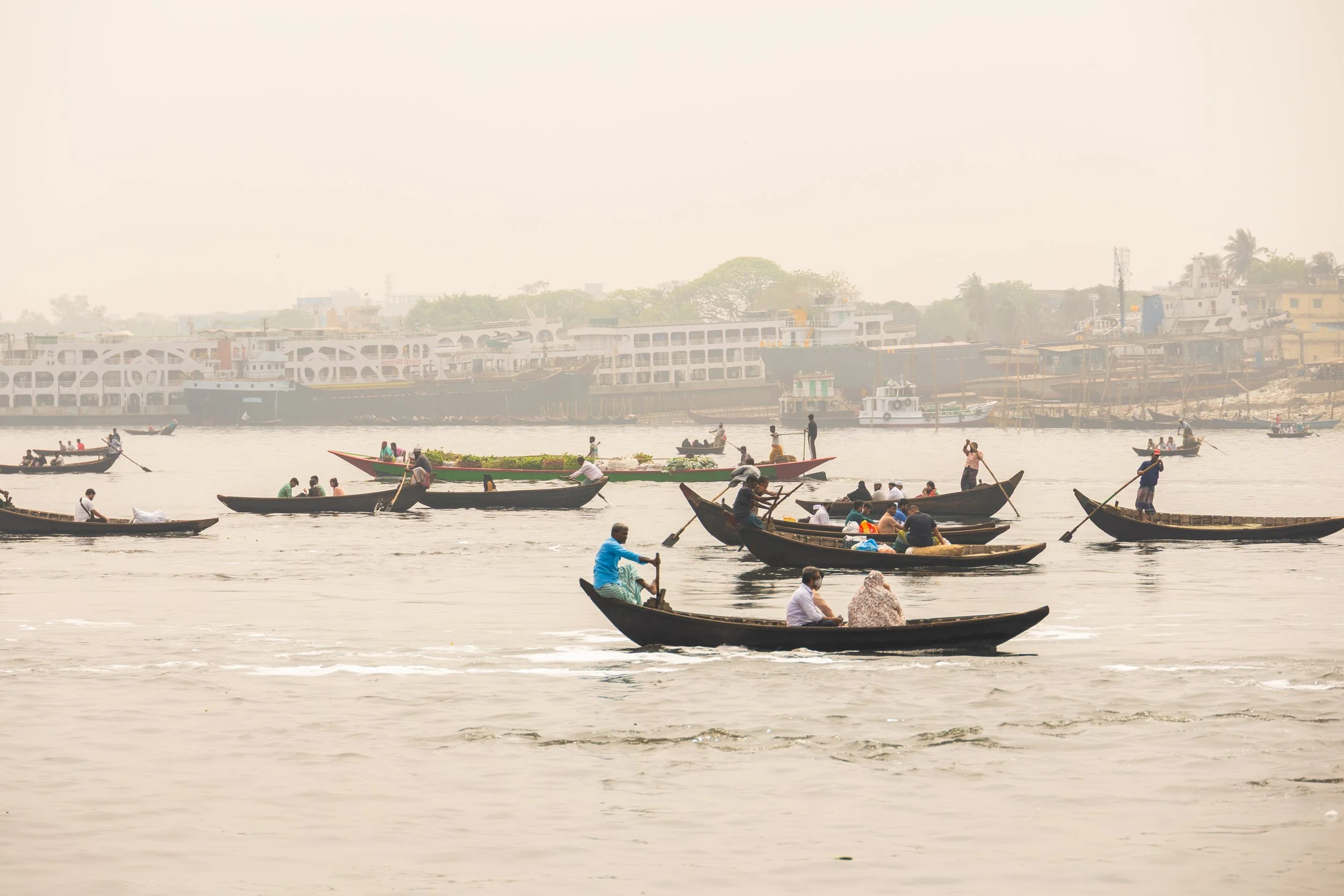
Looking out the airplane window as it approached our destination, all I could see was a brown haze in all directions. We had entered the congested, chaotic capital city of Dhaka. From that moment onward, I was filled with a mixture of overwhelm and fascination with the most incomparable cultural experience of my life.
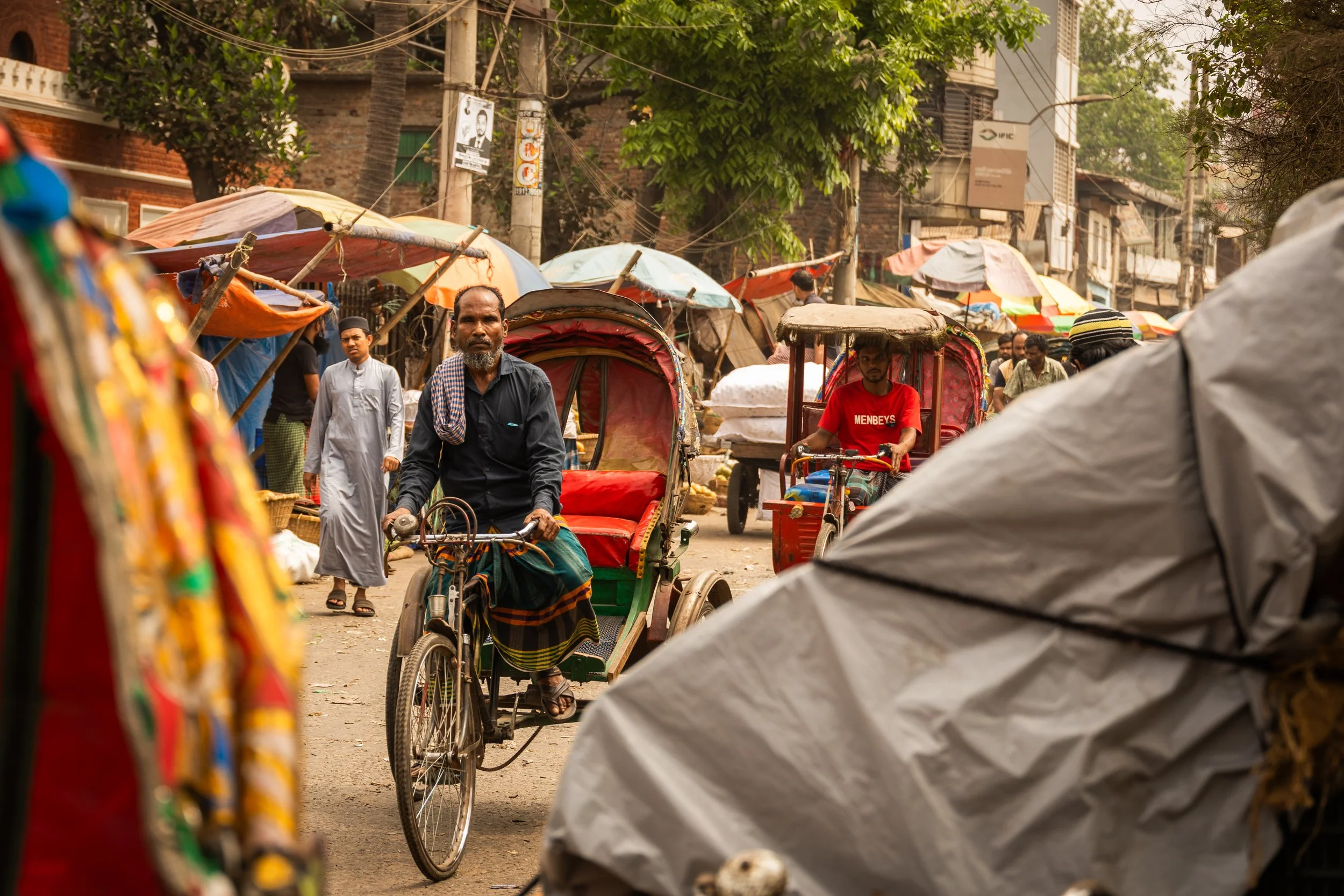
The streets of Bangladesh during Ramadan are beyond description. A rollercoaster of activity that follows the ebb and flow of the daily fasting schedule. Motorized rickshaws and bicycles jam-pack the narrow alleyways in a perpetual rush-hour. Shops close down when men go to pray in the mosques and spring back open when it’s time for everyone to go purchase their fast-breaking (Iftar) meals just before sunset. My architect friends, Rizvi and Fatmi, generously invited us to join them and their colleagues for one Iftar, in which we sat around a sprawling feast. Everyone we met made us feel welcomed and appreciated. We roamed the city - from the depths of the central slum to the aristocratic neighborhoods across the river - and soaked in the vibrancy and energy of daily life. On several occasions I became acutely overstimulated and lost my composure, having to duck into a quiet alley to calm my nerves every so often. Most of the time I was simply absorbing it all.
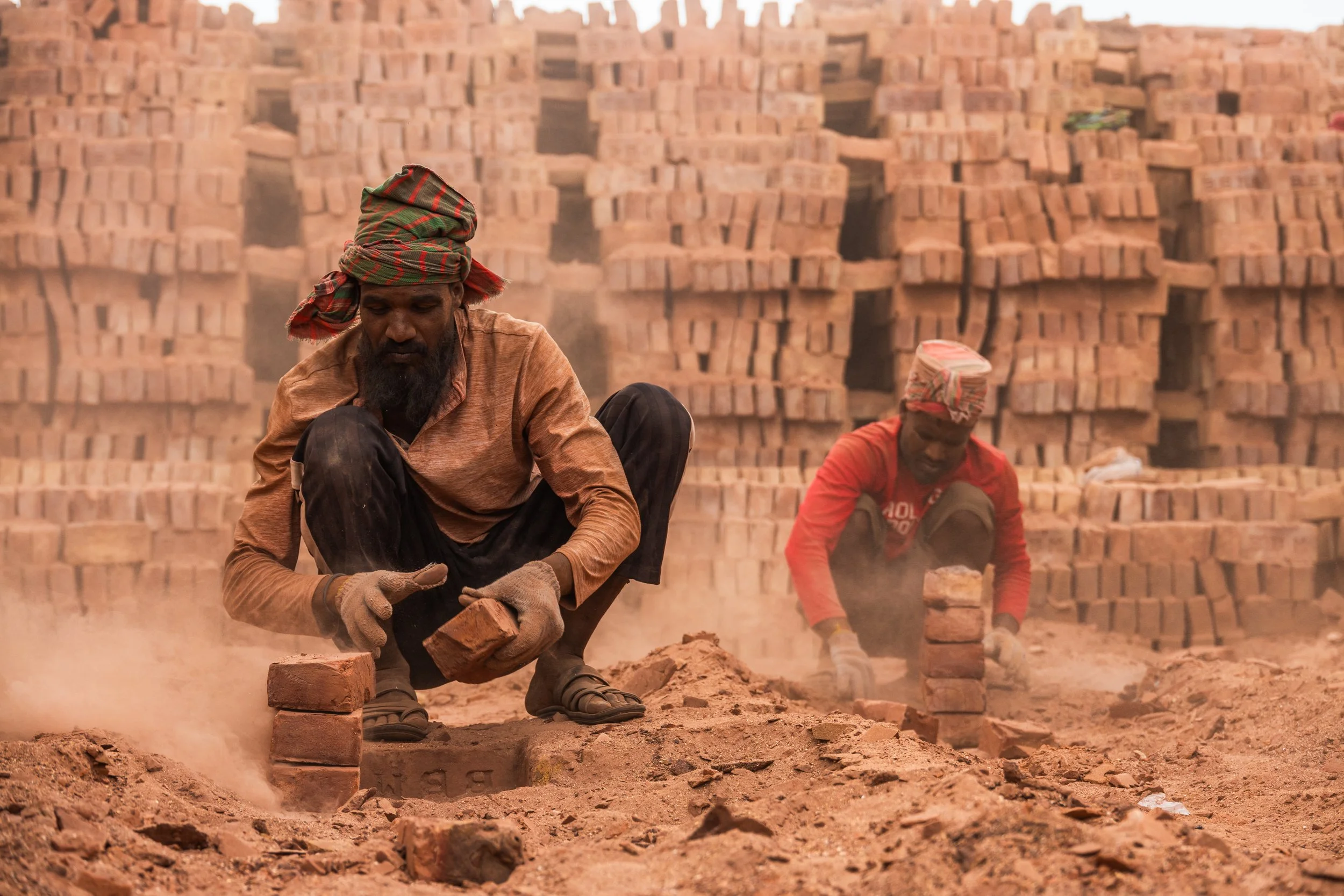
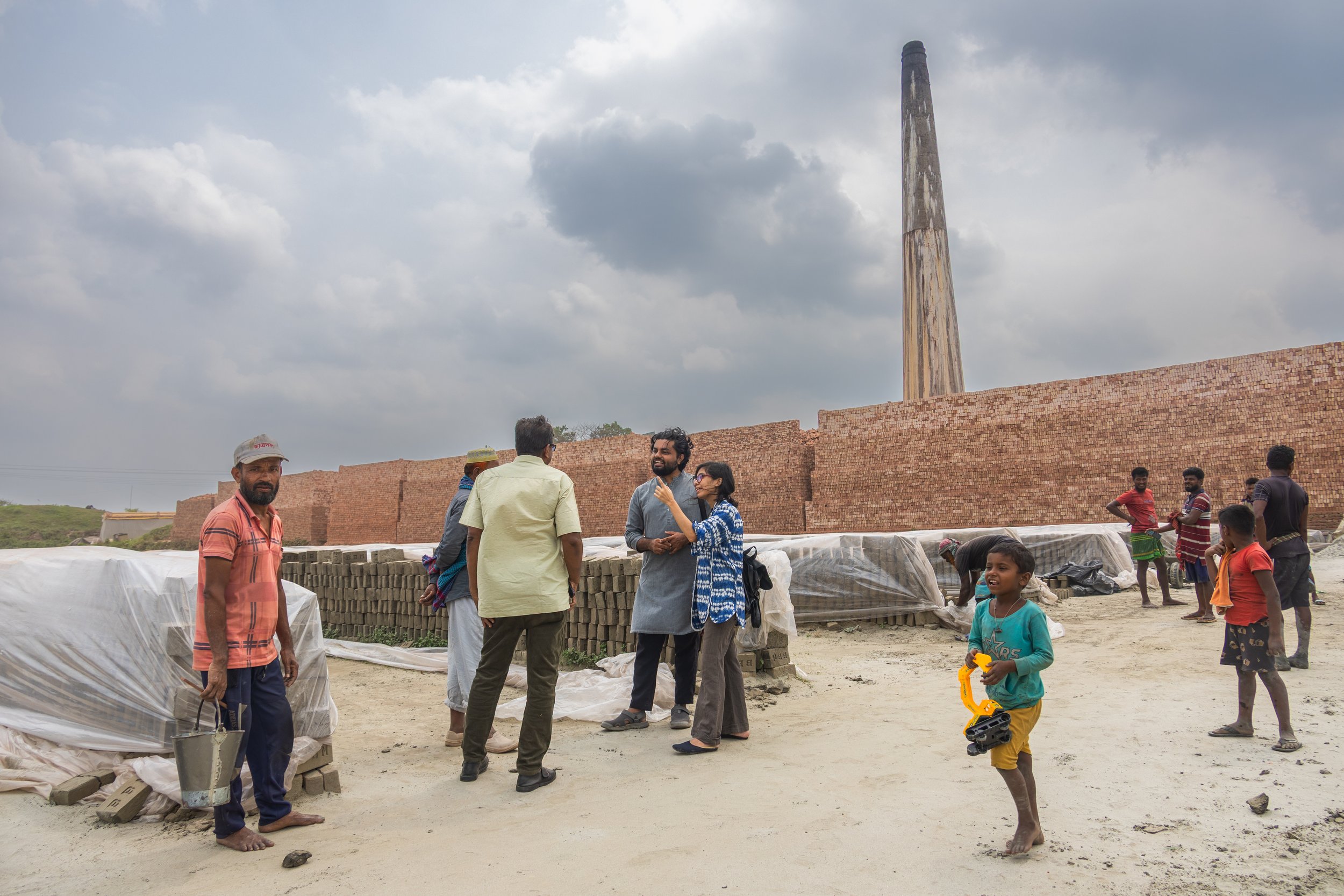
Outside of Dhaka, the pace and colors of life completely changed. Lush green forests and farms spliced by teal-green rivers and serene ponds that reflected a clear blue sky. Red dirt roads lined with rainbow shanty fruit shops. It was a stark contrast from the brownish-grey of the capital city. We managed to join Rizvi and Fatmi on a field trip out of town to one of their future architectural project sites in the infamous brick yards downriver from Dhaka. These brick yards were not just material production sites - they were functioning villages with families, men, women, and children dwelling amongst vast, apocalyptic mountains of clay and sand. We walked through the industrial zones and into the boiling center of a kiln where fresh bricks were being stacked to dry on an underground furnace, interacting with the workers and witnessing how they live. It was certainly not a safe place for children, yet they ran around freely playing with one another and curiously gathering around us outsiders. My friends plan to build a community center for the kids to receive care while their parents work - certainly filling a need for family-friendly infrastructure.
The next stage in our adventure took us to a small coastal town called Kuakata on the Bay of Bengal - one of the most typhoon-vulnerable regions in the country. We took a local bus that hurdled us down the narrow roads, winding past tuk-tuks and rickshaws at terrifying speeds. Landing in Kuakata was a relief, to say the least. Fishing boats and mangrove forests line the outskirts of this rural town, overflowing with Ramadan vacationers enjoying their beach getaways. We didn’t expect the masses of people, but it seemed that this holiday period had scattered the most densely populated city in the world across the entire country. There would be no escape from the crowds on this expedition - so we rolled with it.
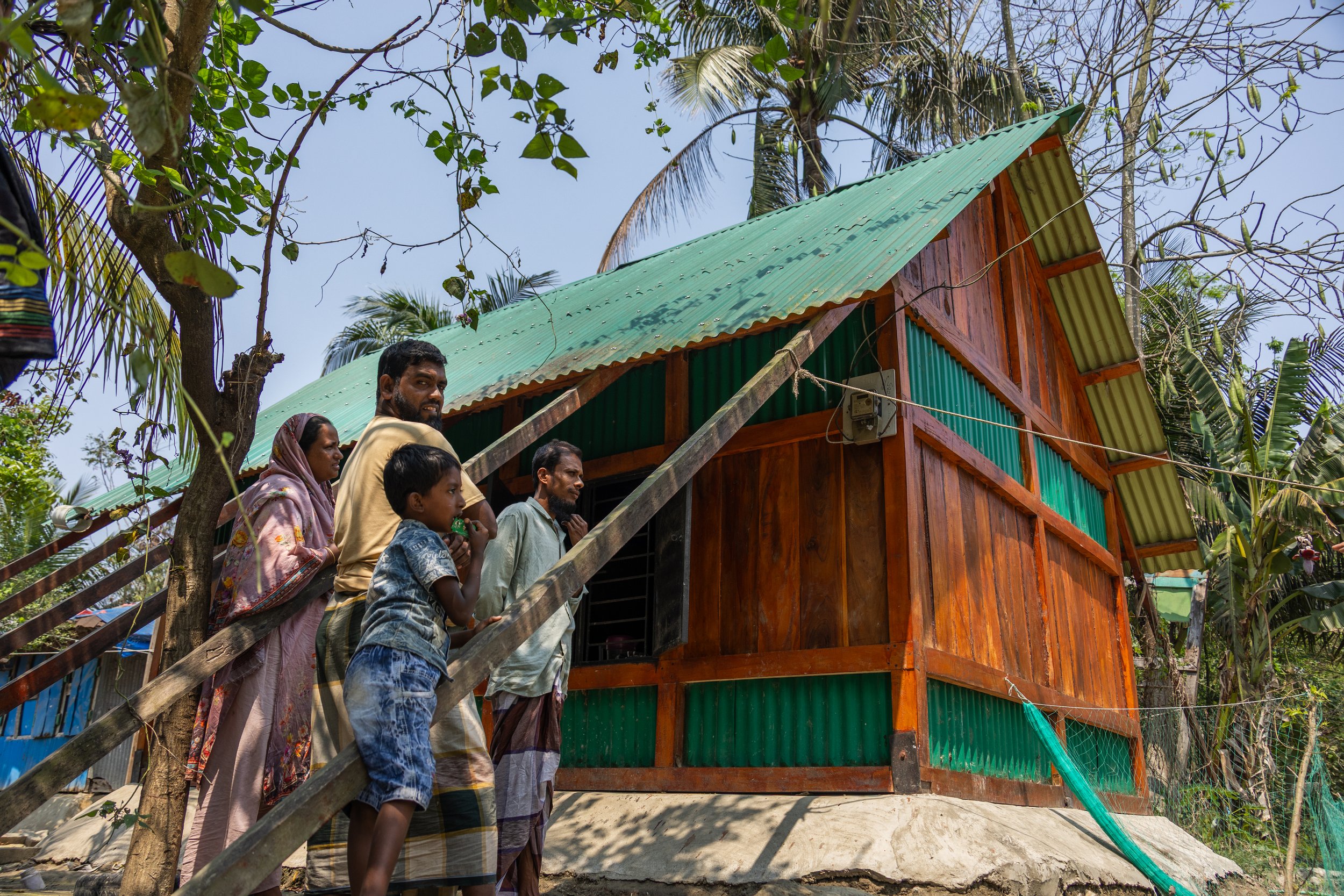
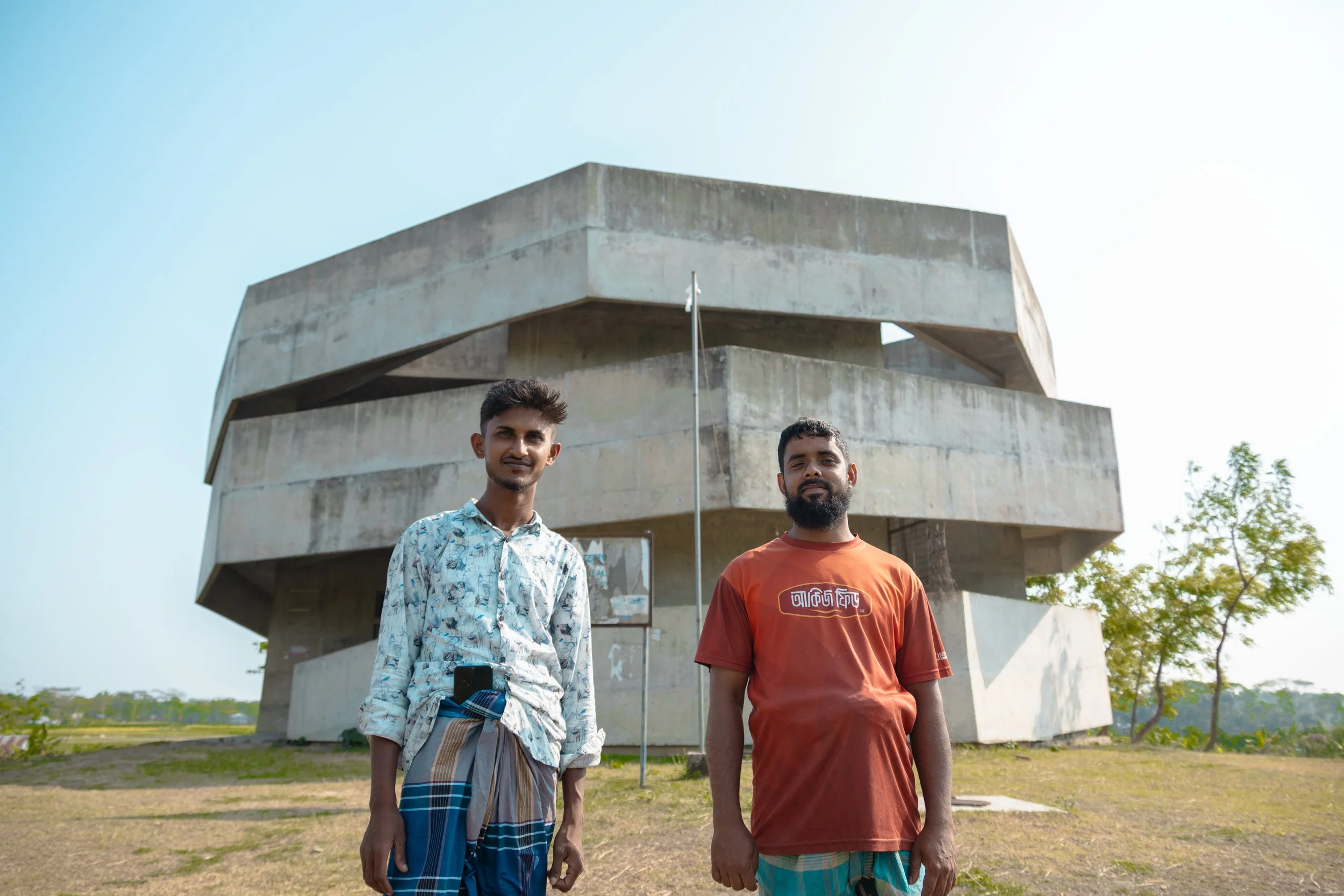
Kuakata delivered more inspiration than we thought we’d find. We had heard that this region is one of the most disaster-prone in the country, so we wanted to investigate ways in which people were learning to live at peace with their volatile environment. We managed to get connected to a Bangladeshi architect named Jewel who took us to a tiny village where he had designed and built a cyclone-resistant house with a local family. The family who lived there proudly stood by their refuge as Jewel explained the innovations that made it a safe, storm-proof haven. I felt conflicting senses of both sympathy and admiration for the resiliency of these people who choose to remain in such a climatically vulnerable place despite its challenges. Along with hyper-local efforts to make the village a little safer in the storms - such as movable, flat-pack housing designs - some NGOs have stepped in and built cyclone-proof shelters for the village’s most exposed residents. So in times of need, multiple parties are coming together to make life more dignifying. The people of Kuakata are living a reality I can never relate to, but one thing I fully understood was that they were industrious, friendly, and self-assured.
After two weeks of Ramadan festivities, meeting kind and interesting people, and scrambling around our own filming and photography projects, we decided to move on from Bangladesh to decompress and process it all. Looking back on it all, I feel that this country completely intimidated me as much as it captivated me. It was an absolute feast for the eyes as much as a deluge of stimuli that are hard to find words to describe. The way this country operates is bewildering, yet I have endless respect and admiration for the geniuses here who are actively innovating a better existence for the 180 million people who call Bangladesh home.
